A borrowed idea
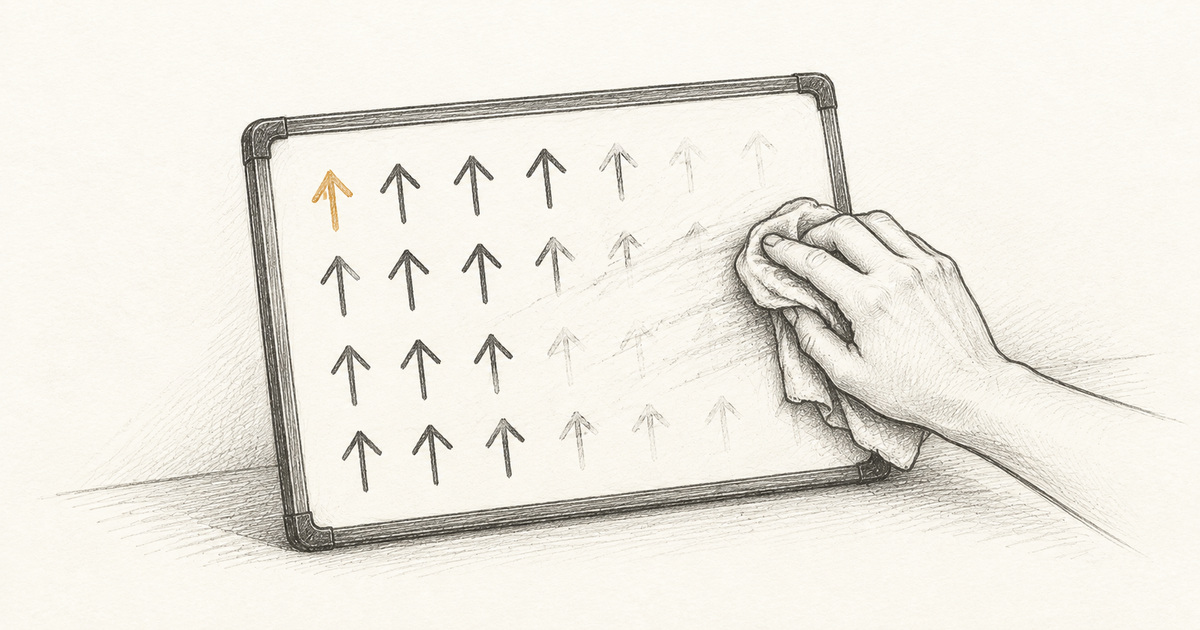
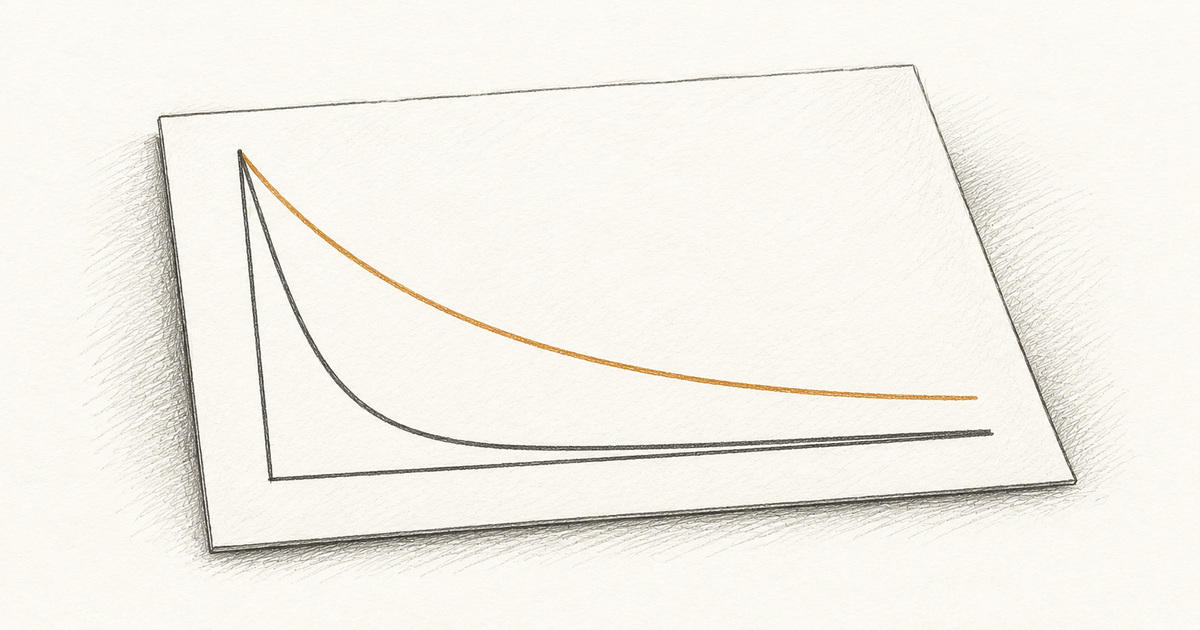
In physics, half-life is the time it takes for a quantity to fall to half its starting value. We borrow the term as an image, not a measurement. We are not claiming a number for how long launches last. We are saying that different sources of attention decay at very different speeds.
Fast decay: events
A listing on a daily list, a social post, a mention in a newsletter sent on one day. Each brings visitors for a short time, then very few. The decay is steep because the content is tied to a moment. People have moved on, the item has scrolled out of sight, and few new visitors arrive.
Slow decay: findable pages
A page that answers a question people keep asking. An interview that explains how a product came to exist. A review that describes what it does and how well. These pages are not tied to a moment. Search engines keep them, links accumulate, and AI systems can read them later. The decay is slow, and sometimes the attention even grows as the page earns links.
Why it matters for planning
If you plan only for the first kind, your result is a steep curve and a long flat tail. If you plan for both, the early spike gives you momentum and the findable pages hold some of it.
The practical task is to move some of the event’s attention onto things that last. For example:
- Link every event listing to a permanent page, not only to a sign up.
- Turn what you learned in the first week into a published account.
- Seek coverage that has its own stable address.
What affects the rate
Clarity. Pages that say specifically what the product is attract more of the right searches.
Independence. Pages written by others draw links and trust.
Maintenance. A page that is kept accurate stays useful. An outdated page loses value.
Fit with questions. Pages that answer common questions are found again and again.
Not everything needs to last
An announcement is fine as an event. Updates, news, and promotions will fade, and that is normal. The point is to make sure that the core description of your product, and the story of why it exists, are not in that category.
How to check
Look at the visits to a page over several months. Does it fall off quickly, or hold? Compare an event listing with a long form page. The difference will be visible. For more on measuring the right things, see the difference between traffic and discoverability.
Thinking about each channel
For each place where your launch appears, ask how it decays.
- A listing in a daily feed: fast. The page may stay, but attention moves on.
- A social post: fast. Most views come in the first hours.
- A newsletter mention: medium. Readers may come back to the archive, but few do.
- A page that answers a common question: slow. It collects visits as long as the question is asked.
- An independent review that is indexed: slow, and it can pick up links over time.
You cannot give each a number, but you can rank them. The aim is to have some of your attention come from the slow items.
Feeding the slow channels
When an event gives you a burst, use it to feed something slower. Add a link to a permanent page. Ask people who found you to write down what they thought. Take a question from the day’s comments and answer it properly on your own site.
Why not abandon the events
Events give you a first audience, early feedback and energy. The point is not to avoid them. It is to be clear about which part of your result they will leave and which part you will have to build another way.
Measuring decay yourself
Look at weekly visits to each page over a quarter. If a page’s weekly visits fall by half in a few days, it is fast. If they hold or rise, it is slow. You will learn more from your own pages than from any general claim.
Related
What separates a launch that lasts from one that dies in 48 hours and permanent coverage versus a ranking day develop the same point. The pillar is product launch strategy: why some launches still bring traffic six months later.