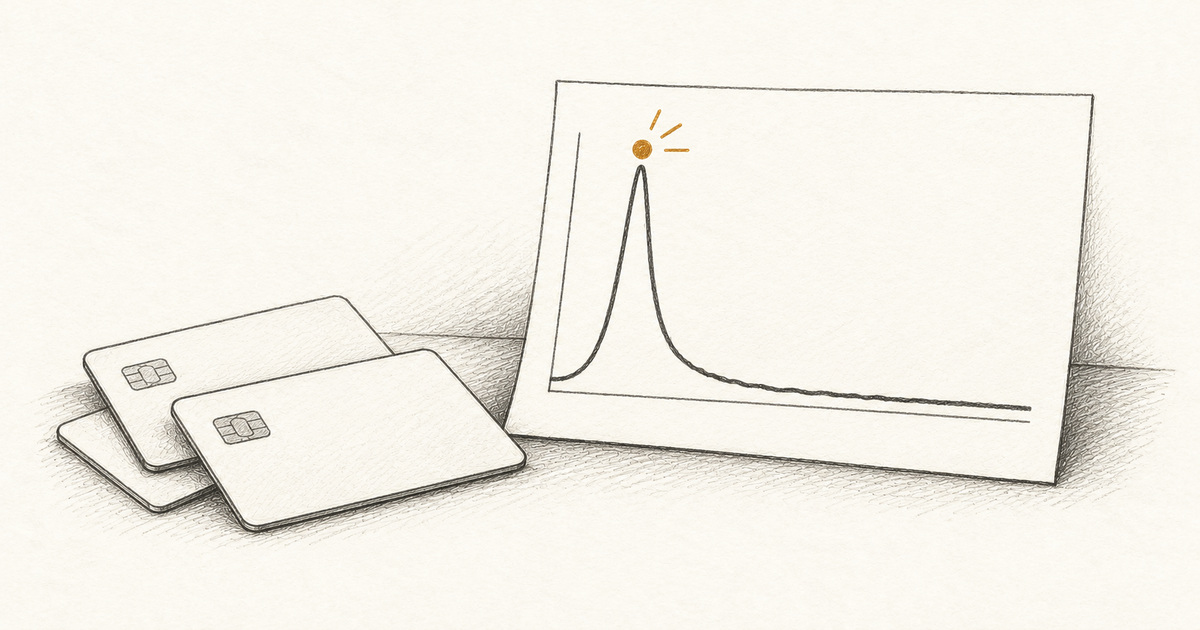
What the spike is
A launch creates a burst of attention. Visitors arrive from a listing, a post, a mention, or a message. The graph climbs, and for a day or two it looks like success. Then it falls and the line settles near where it started.
Founders often expect the spike to turn into customers in proportion to its size. It rarely does, and the reason is who the visitors are.
Why curiosity is not demand
Most people in a spike are browsing. They saw a link, they were curious about something new, and they spent half a minute on your page. They had no problem that your product solves, or if they had, it was not pressing enough to act on.
Compare that with someone who arrives from a search for a specific problem. They came with intent. A small number of those visitors is worth more than a large number of curious ones.
This is not a criticism of the spike. Attention has value. It is simply a different thing from demand, and treating one as the other leads to disappointment.
How the shape of the traffic misleads
A spike concentrates traffic into a short period. Your analytics show a large number, but each visitor is lightly engaged. A day later, traffic looks small by comparison and the founder concludes that something went wrong. Nothing went wrong. The pattern is typical of any event driven source.
What you want to know is not how large the spike was but how many of its visitors fit your intended audience, and what those visitors did.
What to look at instead
Where the best visitors came from. Split signups and usage by source. One source often produces nearly all the people who stay.
What the engaged visitors did first. Look at the early behavior of the people who completed setup. It tells you what the product’s real appeal is.
What the others read. Visitors who left without acting can still tell you something if you look at which pages they viewed.
See product launch metrics: what they actually mean for the measures to track.
What to do with the traffic you had
You cannot recover a spike, but you can use it. Contact people who signed up. Ask what they expected. Fix whatever got in their way. What to do with day-one traffic and the first seven days after launch give the steps.
An illustration with invented numbers
To show how a spike can mislead, take a made up week. These numbers are for illustration only.
On launch day, 2,000 people visit and 100 sign up. During the rest of the week, 300 more visit and 30 sign up. The launch day rate is 5 percent and the rest of the week is 10 percent. The day looked bigger, and it was. But the quieter visitors converted at twice the rate, because they arrived with a reason.
If you had judged the launch on traffic alone, you would have called the first day a triumph and the rest a decline. If you had judged it on rate, you would have noticed that the visitors with intent were the more valuable ones.
What to do about the quieter visitors
They are the audience. Find out how they arrived. Did they search for the problem? Did someone recommend the product? Did they follow a link from a page that explains it? Whatever the route, it is the one that produces people who convert, and it is the one to invest in.
What spikes are good for
A spike is useful. It gives you a lot of behavior to look at in a short time, it brings in some early users, and it lets you test whether the page and the signup flow work under load. Use it as a test and as a source of questions, not as a measure of demand.
A habit to build
After any burst of attention, compare the rate of the burst with the rate of the weeks around it, split by source. The difference teaches you what kind of attention your product converts, and that is information you can use for as long as the product exists.
What lasts longer than a spike
Attention that came from a search, a recommendation, or a page that stays indexed does not vanish in a day. It accumulates. That is the basis of our argument in the half-life of a launch and permanent coverage versus a ranking day.
For the overall picture of the weeks after a launch, return to what happens after you launch.