It reads text, not looks
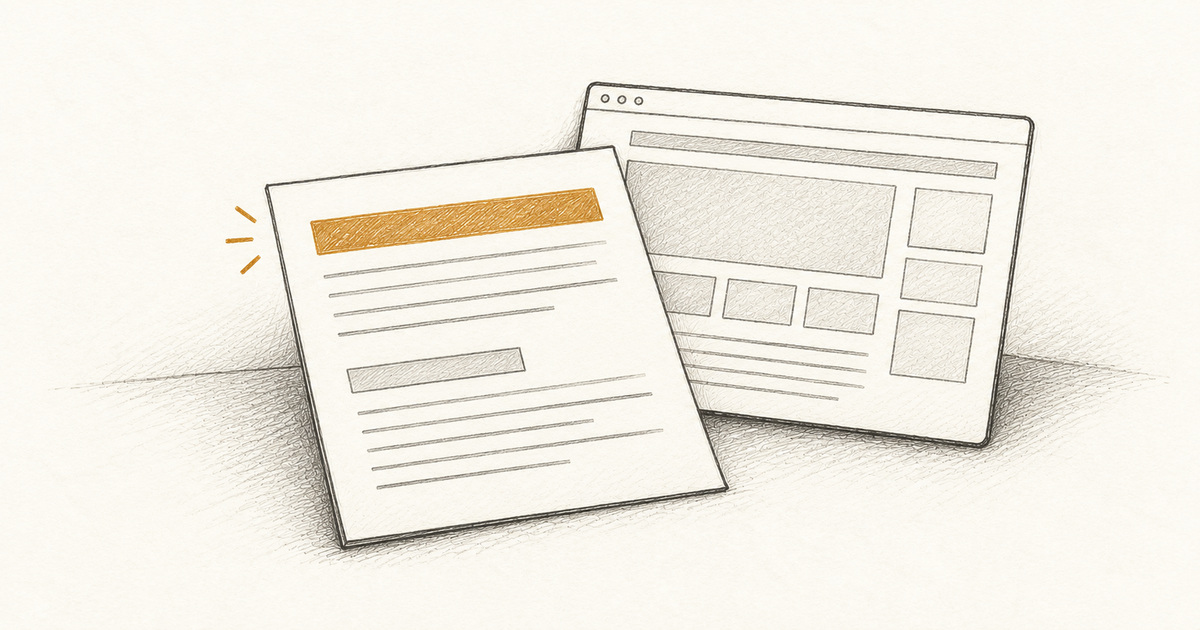
When people visit your site, they see layout, color, and images. A system that reads pages sees something much plainer: the text and structure that can be retrieved from the address. Whatever depends on appearance alone, such as a claim in an image or a message that only appears on hover, may not reach it.
This is useful to know because it explains why a handsome page can be nearly invisible.
What is likely to be read
- The page title and headings
- The main text of the page
- Lists and tables written in text
- Link text and the pages they point to
- Structured data, if present
- The address itself
Plain, well organized text is the easiest material to work with.
What may be missed
Content produced only by scripts. Some crawlers fetch the page without running scripts. Reports on AI crawlers have indicated that several do not execute JavaScript, so text added after loading may not be seen. Verify by looking at the page source and checking that your main content is in it.
Text inside images. A screenshot of a pricing table is a picture. Put the figures in text.
Content behind logins or forms. If it requires an account, it cannot be read.
Pages blocked by instructions. A site can tell crawlers to stay away. Check that you are not blocking the ones you want.
Check what you allow
A file called robots.txt tells crawlers which parts of a site they may fetch. Some site owners block AI crawlers deliberately. If you want your product described by such systems, make sure you are not blocking them by accident. Look at the file on your own domain and read each rule.
Make it clear who you are
Systems build an idea of your product from what pages say, and from what other pages say about it. Be consistent. Use the same product name, the same short description, and the same facts across your pages. Contradictions confuse readers and machines alike.
State facts plainly
A system quoting your page will tend to use sentences that stand on their own. “Acme is invoicing software for freelancers that sends reminders and records payments” can be lifted whole. A sentence that depends on the one before it cannot. See what makes a page quotable.
Independent pages count
What other sites say about you carries weight because you did not write it. A review or interview on a credible site gives a system another description to draw on. Getting cited rather than ranked explores this.
A hands-on check
You can see roughly what a simple crawler sees in a few minutes.
- Open your page and view its source. Is your main text in it?
- Turn off scripts in your browser and reload. Is anything missing?
- Copy the page into a plain text file. Does it make sense?
- Open your robots.txt file by adding /robots.txt to your domain. Are any important sections blocked?
- Open your sitemap, if you have one. Do the pages you care about appear?
If something fails, fix it. These checks cost nothing and catch the most common problems.
Consistency across the web
A system may read your site, your profiles and any independent pages about you. If they disagree on what the product is, what it costs or who made it, the picture becomes uncertain. Keep a short reference document with the product name, a one sentence description, the stage, the price and the key facts, and check that each page matches it.
What you cannot control
You cannot decide what a system will say about you. You can only make it easier for accurate information to exist and be found. Some systems rely on pages they read, and some on older training data that you cannot change. Behavior varies and changes over time, so avoid claims about how any one system will treat you.
Keeping a dated record
When you check what a system says about your product, note the date, the question you asked and the answer. Over a year this gives you evidence of change that you can compare with changes to your pages.
A simple test
Copy the text of your main page into a plain document. Read it as a stranger. Can you tell what the product is, who it is for, and what it costs? If not, a machine will struggle too.
For more, see product page SEO for a startup and the pillar how to make a product discoverable.