Two different questions
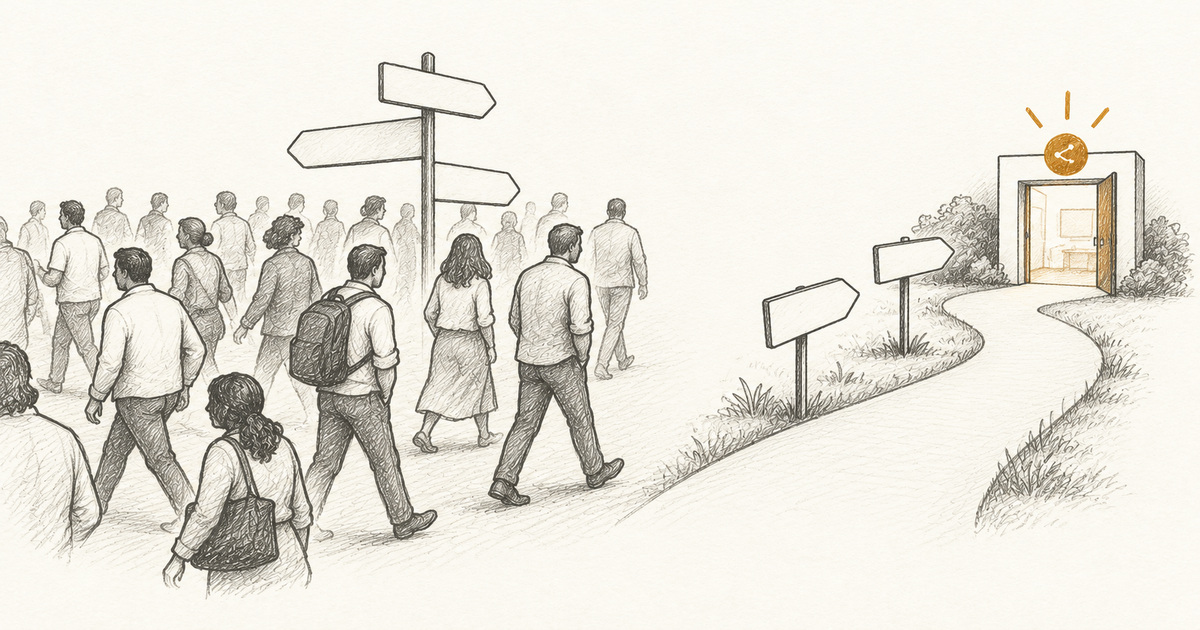
Traffic asks: how many people came? Discoverability asks: if a person with the problem looked, would they find us?
The first is a count of the past. The second is a property of the present. You can have a large count and low discoverability, as after a short burst of attention. You can also have small traffic and high discoverability, as for a product that quietly appears whenever someone searches for what it does.
Why founders confuse them
Traffic is visible. It appears in a chart you can watch. Discoverability is harder to see, because it depends on what happens when you are not looking: searches, questions to AI systems, recommendations from people you have never met.
So founders optimize what they can measure, and it feels like progress.
How they behave over time
Traffic from events decays quickly. After the burst, it returns to a lower base. Traffic from discoverability tends to grow slowly and then stay. It builds as pages are indexed, linked, and cited.
This is the heart of the half-life of a launch: attention from an event fades fast, while attention from findable pages fades slowly if at all.
Signs of high discoverability
- A search for what the product does returns it, or pages about it.
- A search for its name returns clear, accurate pages.
- Independent pages describe it and link to it.
- Questions to AI systems about the category sometimes mention it.
- Visitors arrive each week without a push from you.
Signs of low discoverability
- Visitors come only when you post or announce.
- The product name returns mostly unrelated results.
- Few other sites mention or link to you.
- Your pages say little in plain text.
What to measure
Alongside total visits, track visits from search and from referring sites, which show whether people find you on their own. Track how many pages about you appear for relevant searches. Check periodically whether the product shows up when you ask questions in your category. Be careful with small sample checks of AI answers, since they vary, and record the date of each.
A table of examples
| Situation | Traffic | Discoverability |
|---|---|---|
| A launch day with a large burst | High for a day | Unchanged |
| A single clear page that ranks for a niche question | Small and steady | High for that question |
| A product known only through paid ads | Rises while you pay | Low if you stop |
| A product reviewed on an independent page that is indexed | Small | Rises over time |
The point is not that traffic is bad. It is that the two measures answer different questions, and a plan that cares only about one will neglect the other.
Choosing where to put effort
If you have no discoverability, build some before spending on traffic. If you have discoverability but low conversion, work on the page and the product. If you have both and want more, extend coverage into new questions people ask.
Reading the signals honestly
Do not assume that a rise in visits means better findability. Check where the visits came from. If they came from your own posts or a campaign, discoverability has not changed. If they came from search and referrals you did not prompt, it has.
A long view
Discoverability tends to feel slow, because you build it in small pieces and the return arrives later. That is exactly why it is worth starting before launch rather than after.
How to raise it
Improve the clarity of your pages (product page SEO for a startup), build the missing pages (the pages every product needs before launch), and get written about by others in a form that stays online. See getting cited rather than ranked.
Do not abandon traffic. It brings the people who tell you what is wrong. But do not mistake it for the thing that lasts. The pillar, how to make a product discoverable, brings these together.