Why the name affects discoverability
Your name is the first thing a person types when they have heard about you. If the results for that search are cluttered, confusing, or dominated by something else, you lose people at the last step.
Naming is often treated as a creative decision. It is also a practical one. A name that is hard to find costs you, quietly, every week.
Tests to run before you choose
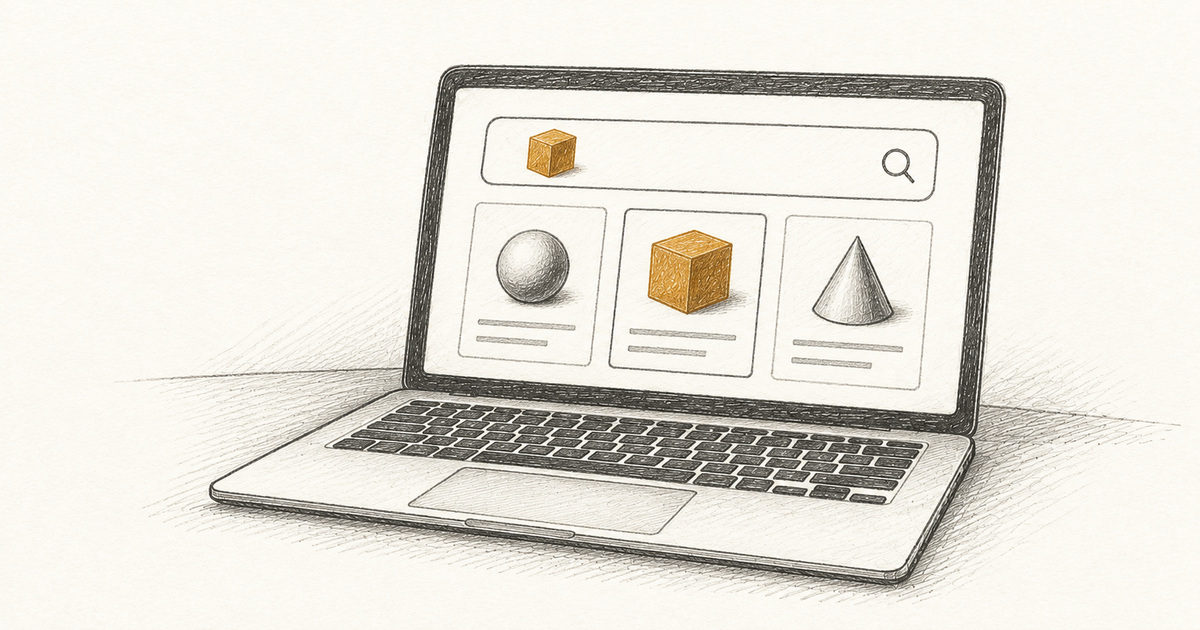
Search it. Type the name into a search engine. What appears? If the top results are about something else, you will be competing with that for years.
Search it with a category word. “Acme invoicing” or “Acme app.” Do your own pages appear, or others?
Say it aloud. Ask someone to write down the name after hearing it once. If they spell it differently, people searching by ear will miss you.
Check the domain and handles. A close match on the main domain and the usual profile names helps people and systems link the pieces together.
Check for confusion. Does it resemble an existing product in your space? Even a harmless similarity will split the results.
Check for unintended meanings. Look at how the name reads in other languages and in common misspellings.
Common words are expensive
A name made of a common word can be pleasant and memorable and still impossible to find. A rare or invented word is easier, though it may need more explanation. Combining a distinctive word with a descriptive one often works well.
If the name is already chosen
You can still help it. Use the full name consistently across your site and profiles. Add a short descriptor in titles, such as “Acme: invoicing for freelancers.” Create pages that tie the name to what you do. Build a few independent mentions, which teach search systems what the name refers to.
Consistency matters to machines
Systems that read pages build a picture of what a name refers to by seeing it used the same way many times. Using variations, abbreviations, and informal versions makes the picture fuzzy. Pick one form and keep to it.
A short checklist for a candidate name
- Does a search for the name return mostly unrelated results?
- Is the main domain available in a form people would type?
- Is the spelling obvious after hearing it once?
- Are the usual profile names available?
- Is there a well known product or company with a similar name in your space?
- Does the name mean something unfortunate anywhere you plan to operate?
Three or more concerns suggest looking again.
Descriptors help
A descriptive line next to the name, in titles and on profiles, helps people and systems understand what the name refers to. “Acme, payment reminders for freelancers” teaches the association each time it appears.
Brand and category terms
If your name is unusual, add category terms to your pages so you can be found by people who do not yet know it. If your name is a common word, add enough surrounding text that a system can tell it refers to a product.
If you must change it
Do it early, redirect old addresses to the new ones, tell the people who know you and update every profile. Keep a note of the old name on an about page for a while, so that people who knew you can find you again.
The cost of changing
Renaming later is possible but costs links, recognition, and time. If you are early enough, it is far cheaper to test the name now. The pages every product needs before launch lists what to put in place around the name, and why your launch disappeared from search explains what happens when a name is not findable. For the wider guide, return to how to make a product discoverable.